
⚙️ The Verifiable AI Control Plane: Real-Time Agents, Observation-Native Models, and Reversible Enterprise Scale
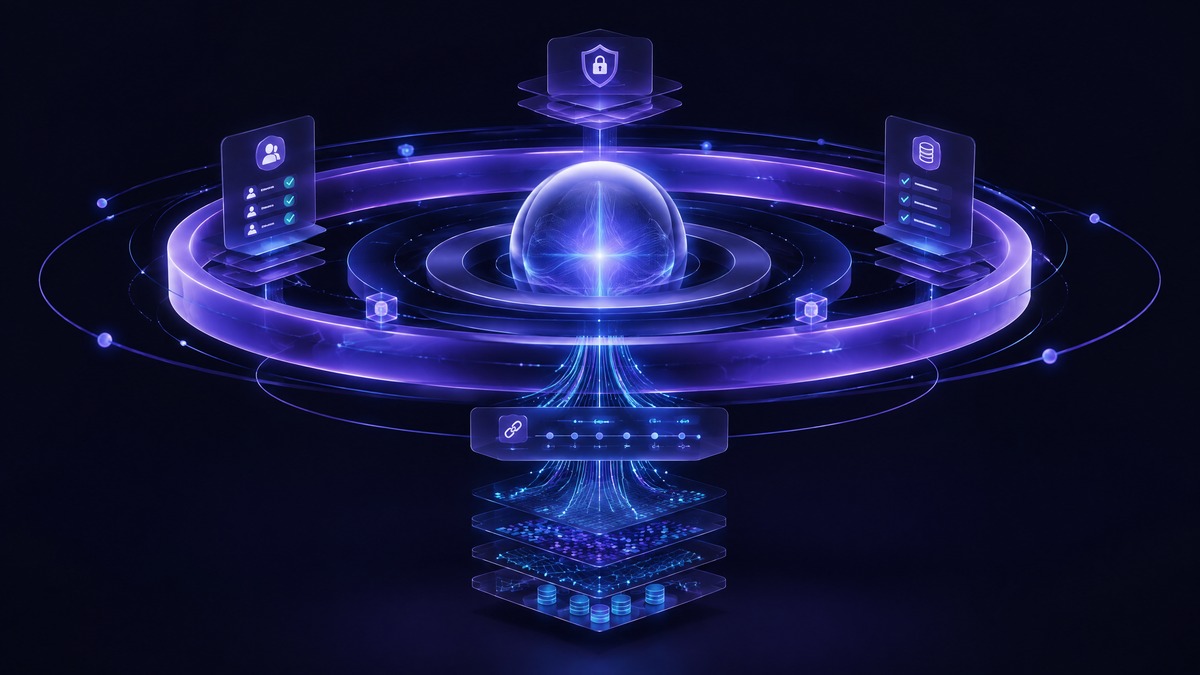
- Real-time agents are becoming systems, not features. Google DeepMind introduced Gemini 3.8 Live and Gemini 3.8 Live Extended Thinking for fluid dialogue, visual grounding, background tool calls, and more complex reasoning. Read the announcement
- AI research is moving closer to verifiable workflows. OpenAI reported an AI-generated construction for a forced Navier–Stokes singularity and released Lean formalizations, while explicitly saying it is not claiming the Millennium Prize. Read the research post
- Observation-native models are widening the AI surface. Google DeepMind’s WeatherNext 3 ingests low-latency satellite observations and emits hourly, high-resolution forecasts for dense fields, cyclone tracks, sparse stations, and renewable-energy variables. Read the WeatherNext 3 announcement
- The control plane is moving above the model. Ramp launched Router.com to route traffic across model providers with visibility into tokens, latency, cost, and fallbacks. Read the launch
- Scale is becoming a governance question. Reuters reported that Anthropic CEO Dario Amodei called for pacing frontier capability improvements, while OpenAI CEO Sam Altman expressed agreement and Meta CEO Mark Zuckerberg favored company-level incentives. Read the Reuters report
This week’s unifying theme is operational control around increasingly capable systems. The visible breakthroughs are not limited to larger models. They include models that listen, see, reason, forecast, call tools, search large spaces of mathematical strategies, and route requests across providers. For enterprise leaders, the implication is direct: the next architecture decision is not only which model to buy. It is how identity, data provenance, permissions, observability, evaluation, cost, rollback, and human approval fit together around the model.

🔬 Breakthrough Research
WeatherNext 3: observations become a first-class input to AI forecasting
Problem Addressed: Prior AI weather models generally relied on analysis data and often lagged physics-based systems in spatial and temporal resolution. That made it harder to use fresh observations and to produce localized outputs for rapidly changing weather-sensitive decisions.
Technical Innovation: Google DeepMind and Google Research describe WeatherNext 3 as a Functional Generative Network mesh transformer that ingests one-hour geostationary satellite mosaics alongside historical analysis. The system produces hourly forecasts and supports dense grids, discrete cyclone tracks, and native sparse-coordinate predictions for station locations. Google reports up to 60% CRPS improvement against IMERG for early lead times in its announcement; that is a Google-reported result, not an independent validation.
Architecture Implications: This is an observation-native, multimodal forecasting architecture rather than a pipeline that treats data assimilation, forecasting, and post-processing as separate stages. Its sparse-coordinate outputs are also a reminder that useful AI systems should emit the representation a decision requires, not only the representation a model traditionally predicts.
Enterprise Relevance: Renewable operators can use wind, cloud, and solar-radiation outputs for planning. Logistics, aviation, agriculture, emergency response, and location-specific risk teams can use more localized forecasts as inputs to operational decisions. Those are potential application areas; each organization still needs its own validation and service-level testing.
Future Direction: Google says WeatherNext 3 began powering Search, Gemini, Maps, Maps Platform Weather API, and Earth Engine, with access through BigQuery and Google Cloud Storage. The direction is a broader class of observation-grounded foundation models that connect live data to domain workflows.
Direct source: Google DeepMind and Google Research, “Introducing WeatherNext 3.”
OpenAI’s reported Navier–Stokes construction: search, formalization, and the limits of an AI result
Problem Addressed: The three-dimensional incompressible Navier–Stokes problem asks whether smooth initial conditions remain smooth or can develop a finite-time singularity. It is a foundational question with implications for the mathematical understanding of fluid dynamics.
Technical Innovation: OpenAI reports a constructive result for every positive viscosity: a smooth, compactly supported external force and a flow beginning from rest whose velocity becomes unbounded in finite time while kinetic energy remains uniformly bounded. OpenAI released a technical paper and Lean 4 formalizations, and says the internal effort used roughly 10,000 concurrent agents, about 2.7 million messages, and approximately 130 billion output tokens for the Navier–Stokes problem. These are OpenAI-reported figures.
Architecture Implications: The important systems pattern is not only the theorem. It is the workflow: parallel search, tool use, cross-agent communication, consolidation, and machine-checkable formalization. A proof assistant can check a formal artifact, but it does not replace domain review of assumptions, translation, or relevance.
Enterprise Relevance: Formal methods and executable verification could become useful in engineering mathematics, simulation, safety cases, and other research workflows. The near-term enterprise lesson is to pair generative search with a verifier and versioned evidence. The announcement does not establish a production service, pricing model, or independent acceptance by the Clay Mathematics Institute.
Future Direction: Research organizations will likely test whether this pattern can be made reproducible, less compute-intensive, and useful beyond a single result. Leaders should separate “machine-checkable artifact” from “independently accepted scientific result.”
Direct source: OpenAI, “On the Navier–Stokes Millennium Prize Problem.”
Gemini 3.8 Live: voice agents get concurrent reasoning and tool execution
Problem Addressed: Traditional voice interfaces force users to wait through long-running reasoning or backend actions, and they often lose context when visual information, multilingual dialogue, or business tools enter the workflow.
Technical Innovation: Google DeepMind introduced Gemini 3.8 Live and Gemini 3.8 Live Extended Thinking. The announcement describes near-real-time visual input, automatic transitions across 97 languages, and background execution of tools and API calls while conversation continues. The Extended Thinking variant is positioned for higher-complexity, multi-step work; benchmark numbers in the announcement are vendor-reported.
Architecture Implications: The split between a scalable live model and a deeper reasoning model suggests tiered routing by latency, complexity, and cost. The agent becomes an orchestration surface that can listen, observe, reason, call APIs, and continue speaking rather than a single synchronous completion endpoint.
Enterprise Relevance: Contact centers, employee support, onboarding, troubleshooting, booking, and workflow-heavy service operations are plausible early use cases. Enterprise access was described as private preview or rollout-dependent in the announcement, so production availability should be confirmed before planning around it.
Future Direction: Voice agents will need stronger evaluation for interruption handling, multilingual accuracy, tool authorization, recording privacy, and failure recovery. SynthID watermarking and a model card are useful provenance and safety measures, but they are not a substitute for deployment-specific controls.
Direct source: Google DeepMind, “Introducing Gemini 3.8 Live and 3.8 Live Extended Thinking.”
🏭 Industry & Strategy Intelligence
Model routing becomes an infrastructure control plane
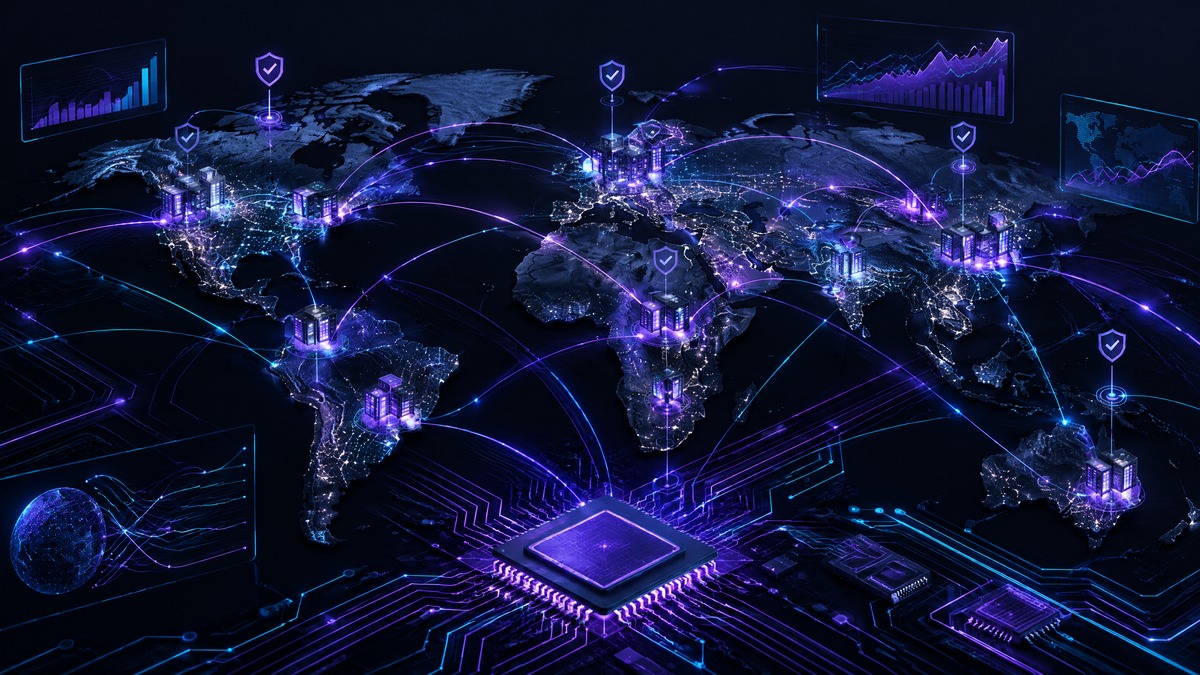
What Happened: Ramp announced Router.com on August 19, 2026, offering one API to access, evaluate, and route traffic across multiple model providers. Ramp says its production routing infrastructure saved customers 40% on cost without compromising quality or uptime; that is a company-reported claim. The product exposes model, provider, service tier, tokens, latency, cost, and fallback attempts. Read Ramp’s launch post
Industry Impact: The value layer is shifting from model access alone toward model selection, spend management, latency, reliability, and provider portability. TechCrunch reported that the initial service covered models from several providers and was initially U.S.-only. Read the independent report
Enterprise Relevance: Model routing can reduce application rewrites while teams test different models, but it introduces another dependency. Procurement and security teams should examine data retention, provider geography, fallback behavior, auditability, and service-level commitments.
Strategic Observation: Treat routing as part of the enterprise AI control plane. The correct question is not whether a router promises savings. It is whether the organization can measure quality, cost, and risk per workload and switch providers without losing governance.
Frontier pacing enters the capital-allocation conversation
What Happened: Reuters reported on September 14 that AI-linked stocks fell after Anthropic CEO Dario Amodei called for slowing the pace of capability improvement while continuing technical progress and using the time for stronger safety work. OpenAI CEO Sam Altman expressed agreement; Meta CEO Mark Zuckerberg favored market-led, company-level incentives. Read Reuters’ market report Read Amodei’s primary essay
Industry Impact: Safety and evaluation are becoming variables in the market narrative for chips, data centers, utilities, and model providers. Reuters reported declines across major AI-linked names and described a divided industry response rather than a settled policy.
Enterprise Relevance: A coordinated pacing regime could lengthen the interval between capability releases and broad deployment. Enterprises should ask vendors for independent evaluation access, incident reporting, release controls, and evidence that safeguards scale with capability.
Strategic Observation: Frontier-AI safety is no longer only an internal research topic. It is becoming a scenario variable for infrastructure planning, vendor concentration, investment timing, and board-level risk oversight.
AI spending accelerates, but the mix matters more than the headline
What Happened: Gartner forecast worldwide AI spending of $2.670 trillion in 2026, up 49.5% from 2025. Its table places AI infrastructure at $1.484 trillion, with AI services at $576.481 billion and AI software at $461.637 billion. Gartner also raised its 2026 forecast for AI application-development platforms to 39%. Read the Gartner forecast
Industry Impact: The forecast frames the market as a convergence of infrastructure buildout, embedded AI in incumbent software, and custom application development. Gartner says enterprises are using embedded AI for operational efficiency, workflow automation, customer engagement, and decision-making.
Enterprise Relevance: Infrastructure commitments, application delivery, and services capacity should be planned together. Vendor lock-in, data sovereignty, and runaway costs should be explicit review items instead of assumptions that adoption will resolve later.
Strategic Observation: A large market forecast is not proof of realized productivity. Use it to size scenarios, then validate each workload’s performance, permissions, portability, utilization, and total cost.
🛠️ Tools, Products & Platform Spotlights
Gemini Enterprise
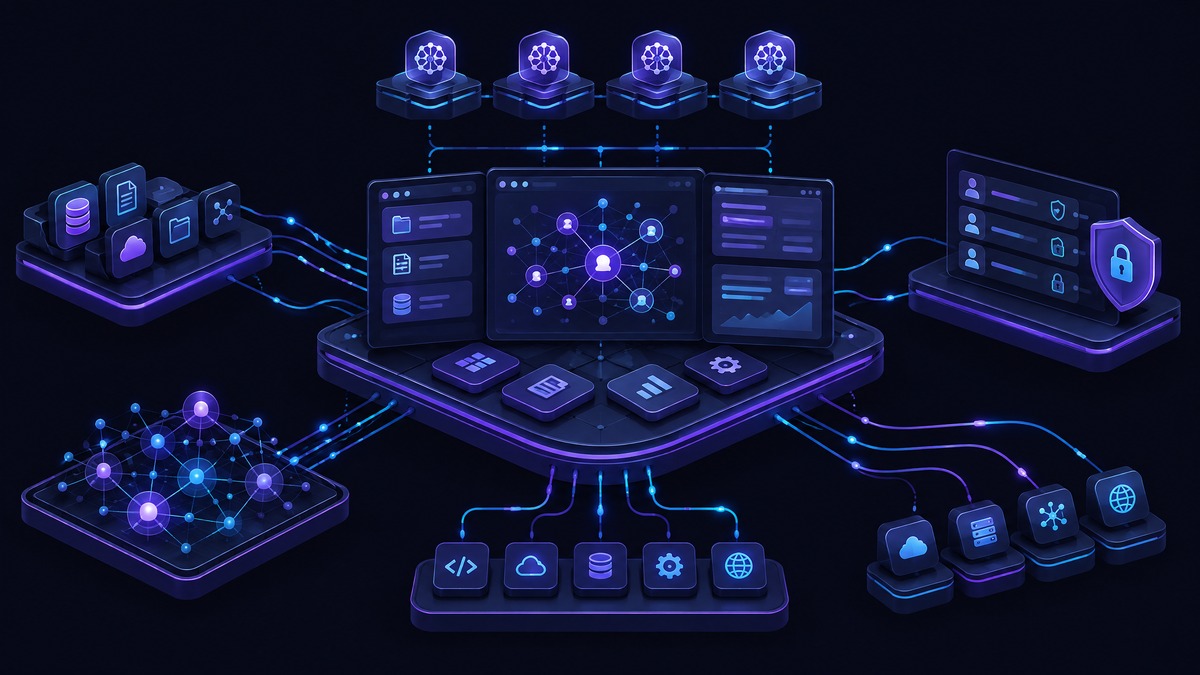
What It Does: Gemini Enterprise provides intranet search, an AI assistant, and an agentic platform connected to enterprise sources such as Google Drive, SharePoint, OneDrive, Confluence, Jira, and ServiceNow. Google describes permissions-aware access, custom agents through Workflow Builder, and centralized controls. Explore Gemini Enterprise
Enterprise Use Cases: Knowledge retrieval, report creation, research and planning, administrative workflows, project intelligence, sales preparation, engineering support, HR operations, and finance analysis.
Key Benefit: It creates a governed workspace for grounded answers and multi-step tasks across existing business information rather than another isolated chatbot.
Tags: enterprise AI knowledge search AI agents
Salesforce in Claude (beta)
What It Does: Anthropic’s Salesforce in Claude plugin brings Salesforce accounts, opportunities, and pipeline into Claude under a seller’s existing Salesforce permissions. Anthropic says it includes 37 skills for account research, call preparation, pipeline review, CRM updates, dashboards, and forecasts. Proposed changes require seller approval before writing to Salesforce. Read the launch
Enterprise Use Cases: Account briefs, call preparation, opportunity hygiene, follow-up tasks, pipeline reviews, forecast drafts, and deal-channel collaboration through the Slack connector.
Key Benefit: The system of record remains Salesforce while the conversational layer compresses research and updates into a controlled workflow. Access is beta-gated and should be piloted with role mapping and audit checks.
Tags: sales operations CRM workflows human approval
Neotheta AI Readiness Decision Gates
What It Does: This new Neotheta checklist helps teams decide whether an AI capability is ready to move from pilot to governed production. It covers business value, data provenance, architecture, evaluation, security, ownership, approval gates, monitoring, and rollback.
Enterprise Use Cases: Use it in architecture reviews, AI investment committees, procurement diligence, production-readiness reviews, and quarterly governance checkpoints.
Key Benefit: It turns a broad “are we ready?” conversation into a repeatable evidence record with named owners and a clear decision: approve, approve with controls, hold, or retire.
Tags: AI governance production readiness control plane
🎙️ Podcasts Worth Your Time
The AI Show Episode 234: How HubSpot Is Reimagining the Entire Customer Journey With AI Agents
Date: August 27, 2026
Publisher: Marketing AI Institute / SmarterX, The Artificial Intelligence Show
Guest: Jon Dick, Chief Customer Officer at HubSpot; hosted by Mike Kaput
The episode examines HubSpot’s move from employee AI fluency, hackathons, and shared experimentation toward an agentic go-to-market model spanning demand creation, sales, customer success, and support. The conversation is useful for leaders because it connects organization design, model choice, governance, and reported operating outcomes rather than treating agents as a standalone feature.
The AI Drop #22: Hardware, Software, and Everything in Between
Date: September 14, 2026
Publisher: Freshfields
Guest: Nabeel Yousef, with Anna Gressel as host
This 20-minute episode explains how export controls are adapting to the full AI stack. It covers semiconductors, infrastructure software, remote-access policy, the risks of integrating Chinese AI models, and the possibility that existing compliance programs are not designed for the speed of current AI development. It is a concise briefing for legal, security, procurement, and infrastructure leaders.
How to Actually Use AI In Your Business in 2026 — Luke Heka #155
Date: September 14, 2026
Publisher: Bothsides Podcast
Guest: Luke Heka, founder of Selr AI
Host Dan Beardall and Luke Heka discuss practical implementation, AI agents, Claude Code costs, process automation, and examples such as faster quoting. The episode is most useful for operators who want to compare the mechanics of deployment, workflow redesign, and cost control against more abstract discussions of model capability.

📅 Webinars & Events
The AI Conference 2026
Date and format: September 29–October 1, 2026; in person at Pier 48, San Francisco, California.
Audience relevance: AI engineers, ML researchers, architects, product leaders, applied scientists, executives, strategists, and founders. The program covers agentic AI, frontier models, infrastructure, security, governance, evaluation, and enterprise applications.
Future of AI 2026 — Lynx
Date and format: October 21, 2026; in person at Hilton Tel Aviv.
Audience relevance: Technology leaders, AI and data professionals, researchers, builders, founders, investors, and technology teams. Topics include large language models, generative models, agentic AI, robotics, AI ethics, and enterprise applications.
Future of AI Summit 2026 — Financial Times Live
Date and format: November 4–5, 2026; in person and digital, with the physical venue at Convene 22 Bishopsgate, London.
Audience relevance: C-suite executives, data and AI leaders, technology professionals, policymakers, regulators, investors, and academic and ethics scholars. The program covers regulation, agentic systems, generative AI, infrastructure, security, governance, leadership, and workforce impact.

🔮 Future Trends & Market Opportunities
Trend 1 — The real-time agent stack will separate latency from depth
Why Now: Gemini 3.8 Live pairs fluid dialogue with background tool execution, while its Extended Thinking variant targets higher-complexity tasks. The architecture implies that one model need not handle every turn.
Enterprise Preparation: Instrument latency, task complexity, tool calls, escalation rate, and cost separately. Design a routing policy before scaling voice or multimodal agents, and make interruption handling and human escalation first-class evaluation criteria.
Trend 2 — Verifiability will become a product requirement for high-stakes AI
Why Now: OpenAI’s reported Navier–Stokes workflow combines large-scale search with Lean formalization. WeatherNext 3 also shows the value of grounding outputs in live observations and measurable forecast targets.
Enterprise Preparation: Identify where generated work can be checked by a proof assistant, executable test, simulator, policy engine, or authoritative data source. Store the evidence chain with the output instead of treating the answer as the only artifact.
Trend 3 — Model diversity will increase the value of governance above the model
Why Now: Ramp Router, Gartner’s spending forecast, and the market debate over frontier pacing all point toward a stack with multiple providers, variable infrastructure commitments, and evolving release conditions.
Enterprise Preparation: Build model-portability tests, provider-specific retention controls, cost budgets, fallback rules, and exit plans. Review the router and the model together as one governed production dependency.

💡 Expert Quote & CEO Strategic Insight
“We must slow the pace at which we improve the capabilities of AI models.” — Dario Amodei, Anthropic, September 2026. Read the primary essay
The most important shift this week is not a single model release. It is the widening gap between what AI systems can do and the number of controls required to use them responsibly. Gemini 3.8 Live makes the point at the interaction layer: a voice agent can see, speak, reason, call tools, and continue while work happens in the background. WeatherNext 3 makes it at the data layer: a model can ingest live satellite observations and emit localized, probabilistic outputs for operational decisions. OpenAI’s reported Navier–Stokes result makes it at the research layer: a large multi-agent search can produce a candidate construction and a formal artifact that a proof assistant can check. These are different domains, but they share one architecture lesson. The model is becoming one component in a larger system of evidence, permissions, tools, and verification.
That lesson matters because the market is scaling the surrounding stack at the same time. Gartner forecasts $2.670 trillion in worldwide AI spending for 2026, with infrastructure as the largest category. Ramp is packaging model routing as a control plane. Reuters’ reporting on frontier pacing shows that safety and evaluation are entering capital-market narratives. Enterprises therefore face two linked risks. The first is technical: a system can fail because a model is wrong, a tool is misused, a context source is stale, or a fallback behaves differently. The second is strategic: a vendor, policy environment, or infrastructure constraint can change faster than the organization’s architecture and contracts.
The correct response is neither blanket acceleration nor blanket hesitation. It is reversible scale. Start with use cases whose value and failure modes can be measured. Separate routine low-latency work from high-complexity reasoning. Require evidence for consequential outputs. Keep permissions narrow, record tool activity, and make rollback a tested operation rather than a statement in a design document. For research workflows, pair agentic exploration with domain experts and executable verification. For procurement, make retention, geography, portability, and independent evaluation part of the buying decision.
Three practical actions follow. First, map every production AI workflow as a control surface: identity, data, tools, models, evaluation, monitoring, approvals, and rollback. Second, run a 30-day evidence sprint on one high-value workflow with a baseline, a cost budget, a failure taxonomy, and a named owner. Third, ask each strategic vendor how its next capability release changes your testing, permissions, retention, and incident-response obligations.
Strategic conclusion: enterprise AI advantage will accrue to the organizations that can scale capability and control as one operating system.
EnterpriseAI #AIGovernance #AIInfrastructure #AgenticAI #ResponsibleAI
— Neotheta CEO | AI Research Lab
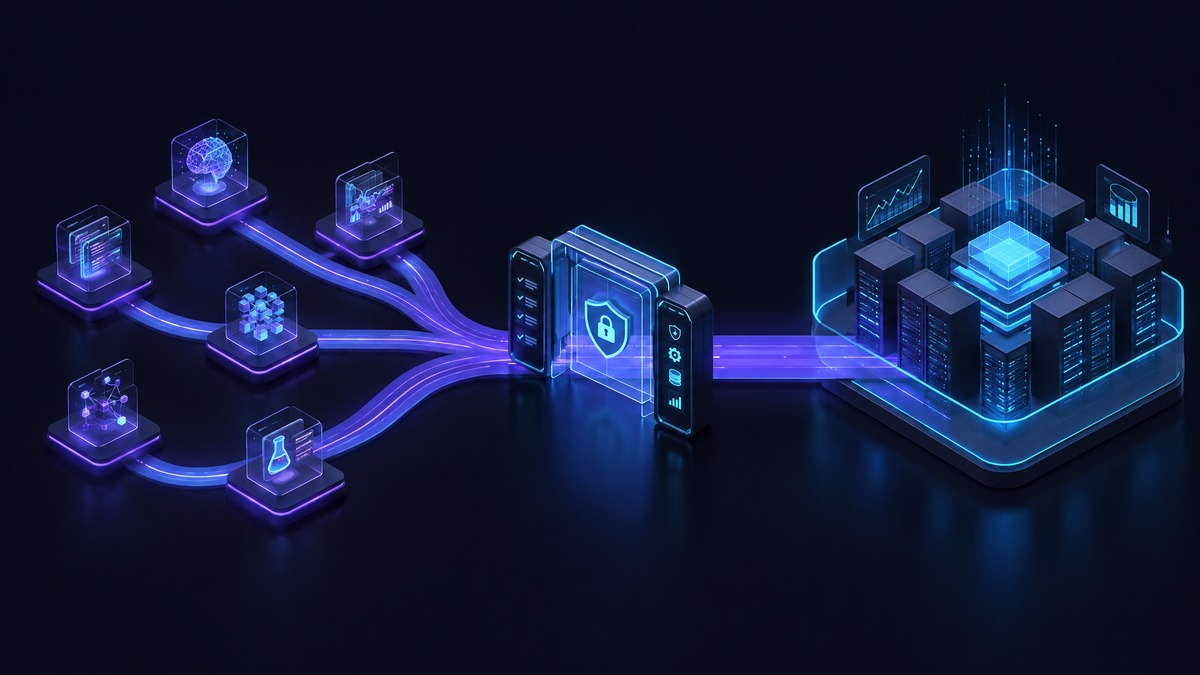
AI is moving from isolated pilots into workflows that touch customers, employees, data, infrastructure, and decisions. Neotheta helps leadership teams design the secure operating model required to move from experimentation to scalable, business-ready AI.
