
🖥️ AI Operating Systems Are Replacing AI Tools
This week marks a defining moment in enterprise AI evolution. Organizations are moving beyond isolated AI deployments and adopting AI operating systems — unified platforms that orchestrate intelligence, automate workflows, and embed AI as a core enterprise layer. The era of AI tools is giving way to the era of AI infrastructure.

🚀 This week marks a defining moment in enterprise AI evolution.
📊 Organizations are moving beyond isolated AI deployments toward unified AI operating systems.
🧠 AI is no longer a tool — it is becoming the operating layer of the enterprise.
🏢 Enterprises are consolidating fragmented AI solutions into integrated orchestration platforms.
⚙️ Governance, observability, and compliance are now core architecture requirements.
📈 Competitive advantage is shifting toward execution velocity and system-level integration.
🔐 Control over enterprise data pipelines and AI workflows is becoming strategically critical.
🌐 The era of AI tools is giving way to the era of AI infrastructure.
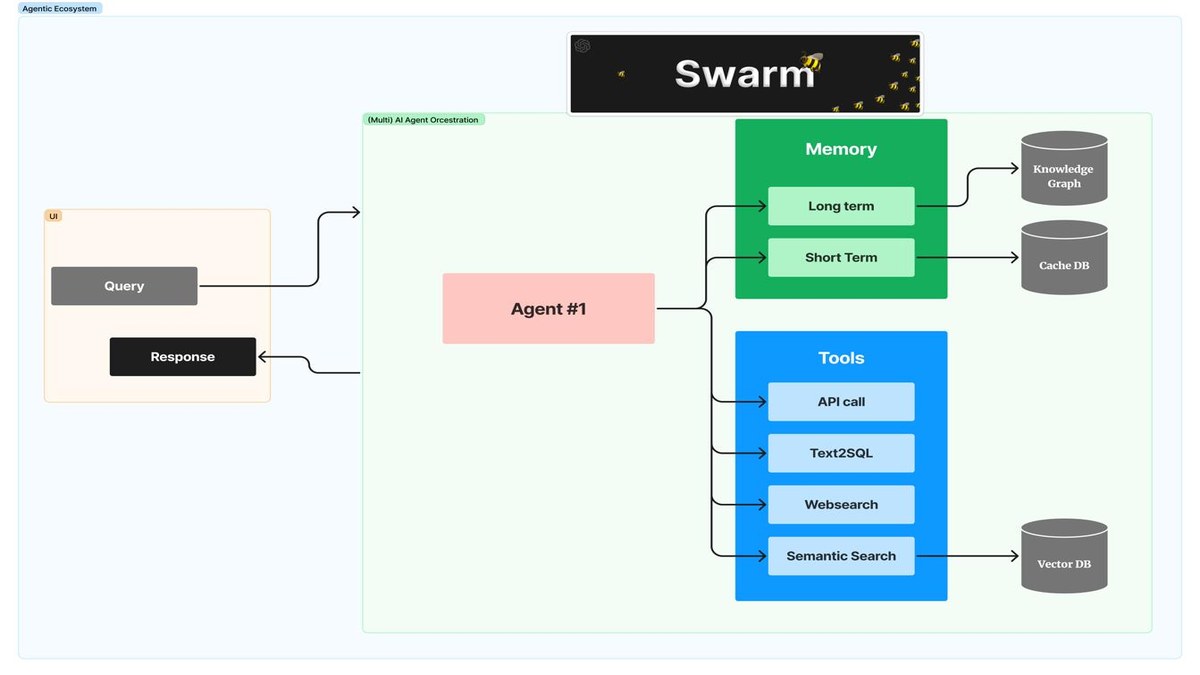
🚀 Researchers are advancing swarm-based AI systems where multiple intelligent agents coordinate dynamically.
⚙️ Unlike traditional multi-agent systems, swarm architectures enable emergent collective intelligence.
🏗️ Agents self-organize to solve complex, distributed problems without central control.
📌 Enterprise Applications:
- Supply chain optimization
- Cybersecurity response systems
- Financial operations orchestration
⚠️ Key challenges: Explainability and governance remain critical hurdles.
📈 Long-term impact: Could redefine how enterprise software architectures are designed and scaled.
Multi-Agent Systems
Emergent AI
Enterprise Automation
📚 New long-term memory frameworks are enabling persistent AI reasoning across sessions and workflows.
⚙️ AI systems are beginning to maintain state across interactions — a fundamental shift from stateless models.
🏢 Enterprise use cases: customer context retention, multi-session project management, institutional knowledge capture.
📊 Memory-augmented AI reduces hallucination rates and improves decision consistency.
📈 Memory layers are becoming as critical as compute layers in enterprise AI stacks.
Persistent Reasoning
Enterprise AI Stack
Stateful AI
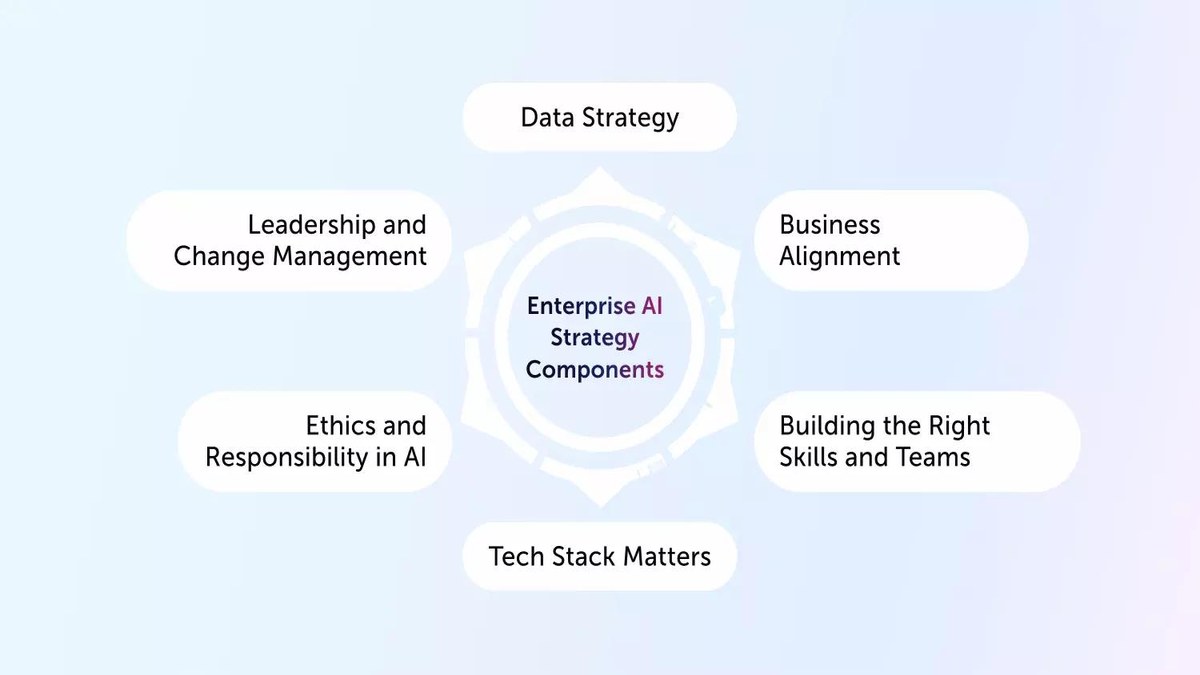
⚔️ Major AI vendors are rapidly evolving into full enterprise operating ecosystems.
📦 Models, infrastructure, vector databases, agent frameworks, and governance tools are being bundled into unified platforms.
📊 Enterprises that adopt these platforms early are building significant switching-cost advantages.
- Platform lock-in is becoming a strategic consideration for enterprise AI procurement
- Interoperability and portability are now key vendor evaluation criteria
- Regulatory focus on AI governance is intensifying globally
- Strategic advantage lies in platform control, not model selection
📈 The AI platform wars are creating durable competitive moats — choose your ecosystem wisely.

⚙️ A new category of enterprise AI platforms is emerging: AI Workflow Operating Systems.
✨ These platforms coordinate AI agents, automate multi-step workflows, and integrate with existing enterprise systems.
📌 Core Capabilities:
- Agent orchestration
- Memory persistence
- Tool chaining
- Governance controls
USE CASES
- Enterprise workflow automation
- AI-driven decision pipelines
- Cross-system agent coordination
BENEFITS
- Faster workflow execution
- Scalable automation
- Reduced integration complexity
RISKS
- Vendor lock-in risk
- Requires strong data governance
- Debugging complexity in agent chains
📈 Enterprises adopting these systems report faster workflow execution and automation scaling.

Host: Andreessen Horowitz · Guests: AI founders & infrastructure leaders
Topic: AI operating systems, orchestration, and infrastructure shifts
📅 Published: Recent weekly episode stream · ⏰ Duration: ~35–45 minutes · 🌐 Platform: Spotify / Apple Podcasts / Web
🔗 Official Podcast Hub: a16z.com/podcasts
📌 Why enterprise leaders should listen:
- Deep insights into how enterprise AI stacks are evolving
- Covers orchestration, infrastructure economics, and AI-native business models
- Strong relevance for CTOs, CIOs, and platform teams
🔑 KEY INSIGHT
“AI is no longer a feature to be added — it is the operating system of the modern enterprise.”
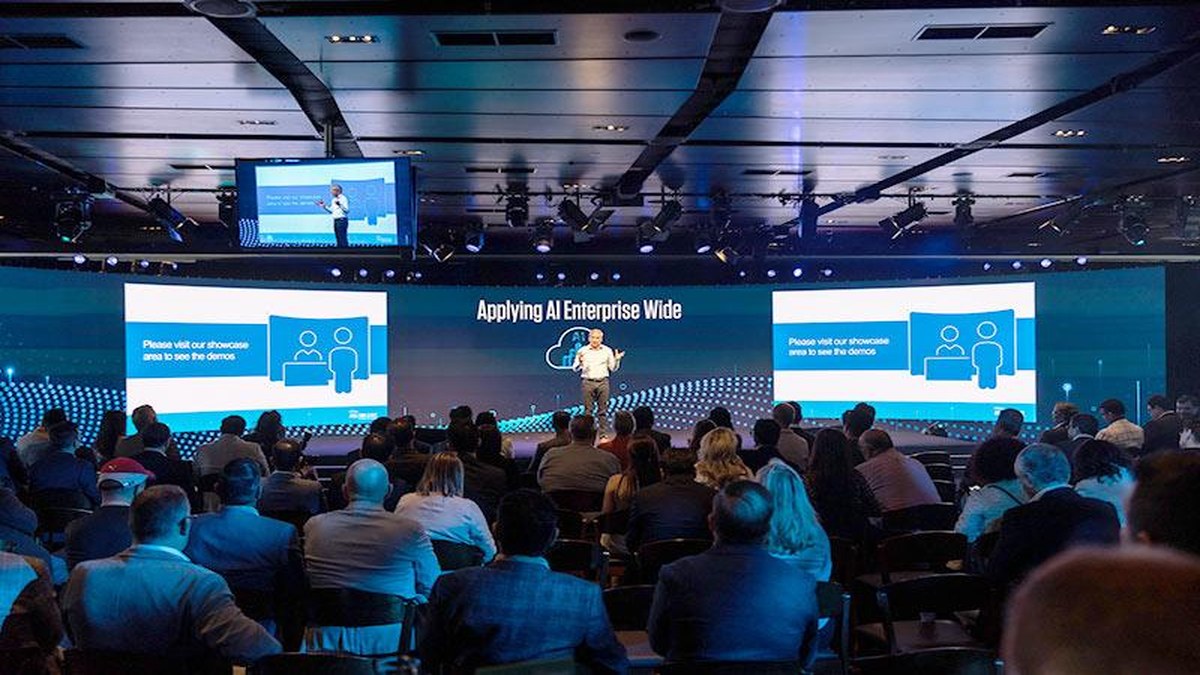
Organizer: Google Cloud · Focus: Enterprise AI, Generative AI, MLOps, AI deployment
📅 Schedule: Ongoing May 2026 sessions · 🌐 Venue: Virtual + Hybrid
🎯 Audience: Enterprise architects, AI leaders, CTOs
🔗 Official Events Hub: cloud.google.com/events
📌 Why it matters:
- Real-world AI implementation strategies from Google Cloud practitioners
- Governance, deployment, scaling, and AI operations best practices
- Practical enterprise transformation use cases
Organizer: NVIDIA · Focus: AI infrastructure, AI agents, accelerated computing
📅 Upcoming Sessions: May 2026 ongoing schedule · 🌐 Venue: Virtual / On-demand
🎯 Audience: AI engineers, enterprise infrastructure teams
🔗 Official GTC Hub: nvidia.com/gtc
📌 Why it matters:
- Covers production-scale AI infrastructure and deployment
- Strong focus on enterprise optimization and next-generation AI systems
- Deep dives into accelerated computing for AI workloads

🚀 Organizations are evolving toward AI-native operating models where AI agents manage core business functions.
📊 AI agents will increasingly manage internal workflows, decision routing, and operational coordination.
🏢 Departments will shift toward human + AI hybrid execution models, with AI handling routine complexity.
OPPORTUNITIES
- Massive productivity gains across operations
- AI-native enterprises will emerge as category leaders
- Platform-led strategies will dominate competitive landscapes
RISKS
- Governance, accountability, and oversight challenges
- Requires robust auditability and control frameworks
- Execution speed will define competitive advantage
📌 AI is no longer a feature — it is infrastructure. The enterprises that treat it as such will lead.
“The next generation of enterprises will not run on software alone — they will run on orchestrated intelligence.”
Reflects the industry shift from isolated AI tools toward AI-native operating systems. Enterprises that master orchestration will define the next decade of competitive advantage.
Ready to Build Your AI-Native Enterprise?
At Neotheta, we help enterprises architect AI-native execution systems. From orchestration to deployment — we build scalable, enterprise-grade AI operating layers.
